Monday, June 30, 2025

The Life of Chuck (2025)

“All that we see or seem is but a dream within a dream.”
-Edgar Allan Poe

   Stephen King has been writing horror stories for a little over fifty years. He’s sold more than 350 million book copies and in 40 different languages. Mike Flanagan is no stranger to horror with his Haunting of Hill House series and has adapted some of King’s works. While both King and Flanagan’s works of horror may have scared some, their stories aren’t always about tales of blood. Sometimes its about the heart.
  The Life of Chuck is by no means a horror story. It’s an uplifting tale about finding life in the midst of death, finding joy during times of tribulation. It reminds us that life is a gift, even if that gift may be brief. And all the people that we meet in life? They are gifts as well.
  The world of Chuck is saturated in death and destruction, real life horror. Yet when I walked out of the cinema it had a profound effect on me (and still has) it was the love that I remembered the most. The film is full of optimism. To not look down at our phones constantly, but look at one another. Find connection rather than distraction Most importantly the film encourages us to laugh, to live, and to dance. 
SPOILERS BELOW
The film is split into 3 parts, but goes in reverse. 

Act Three: Thanks Chuck

And so it came, the end. Hurricanes, earthquakes, floods, fires, riots. Piece by piece, the coasts of California slid into the sea. Rage, terror, despair raced ahead, people frantic for safety, or solace, or something. As the disasters continued, everything became… quieter.
The internet and cell service just stopped. The endless suicides stopped. People left work and walked home oddly calm. Hospitals were emptied. Everyone searched for their loved ones. The hunger for connection towards the end. Everyone tried to understand why everything was happening, but one thing stayed constant.
Charles Krantz.
His face stared at you straight from the billboards, smiling. “39 Great Years,” the signs said. “Thanks, Chuck!” Then before the televisions went out there were ads of him sitting at his desk, pen pressed to paper, and fatigue seeping into his face. “39 Great Years. Thanks Chuck!” the voice on the ad says.
Look up in the sky and Skywriters write out Chuck’s salutations in smoke. Even graffiti trumpeted the achievements of Charles Krantz, the words, “Thanks, Chuck!” scrawled across concrete-block walls.
“Our man Krantz is the Oz of the apocalypse,” jokes the funeral director.
But who is this mysterious man? Who is Chuck? No one knows.
Marty Anderson tries to find out, but his inquiries come up empty. It seems that everyone has more important things on their minds. As the world falls apart around Marty, he continues to try to inspire his students to learn. He attempts to tell his student’s parents that their kids still have a future no matter how the world looks at the moment. He was asked if during the end if people would marry or divorce. Without hesitation he says marriage wins. People crave connection now, not separation. He’s a man of principle and optimism. 

 As the cars stop working. Marty makes a long all the way to his ex-wife’s house. He needs to reconcile with her in what feels like the world’s last moment. During his trip he makes it a point to talk to others, not about the weather or how the world is about to die, but to find a real lasting connection that ironically won’t be much longer. He wants to spend the world’s final moments with Janice, his ex-wife. He knows that. The electricity everywhere goes, but digitalized ads of Chuck appear on the windows. He finally finds Janice. They talk with time nearly gone, each second, they spend with one another feels like a treasure. A treasure he should have never left in the first place. He knows this is how he wanted to spend the last seconds before the end. Planets start vanishing in the night sky. Marty and Janice look at one another one last time.

Act Two: Buskers Forever

   We finally meet Chuck in Act II. We learn that Chuck is an accountant, devoted husband, and loving father. Living a life most people strive for. Like most people Chuck has many layers. He’s in town for an accounting conference. He’s on his to the conference when he stops to listen to a drummer play the drums. Tapping his finger in the air, and for a brief moment has a flashback that causes him to dance. People gather around thinking it’s a street performance dance. He sees a girl and pulls her in and dances with her. This lightens the mood compared to the sharp contrast of doom and gloom in the previous act. Chuck begins to have a headache and we are made aware of the trouble brewing on the horizon.
 The dance is a burst of joy, freedom, and spontaneity. Chuck knows life is short, so he decided to fully enjoy life by engaging in something that he loves. Dance is a metaphor for life, a fleeting, joyful manifestation of breath and beat, precision and freedom. 

Act One: I Contain Multitudes

 Chuck’s grandparents help raise him when his parents died in a car crash. His grandmother helped instill in him a love of dance. We find out the flashback he had that made him want to dance was of when he and his grandmother danced in the kitchen when he was a little boy. The love continues into middle school. When his grandmother passed his grandfather pushes Chuck into another direction. Into math. And while the film could’ve easily presented these two dichotomies as a “good” thing and a “bad” thing, that for Chuck to abandon his dancing would be to abandon his dreams, the film doesn’t really do that. 
   Chuck’s grandfather tells a young Chuck that math can also be beautiful. One can experience joy in numbers just as much as one can on the dance floor. Moreover, it can be a profound expression of truth: Math doesn’t lie, Chuck’s grandfather tells him. And it can even tell you things about the future. For instance, math can tell Chuck how difficult it is to make a living as a dancer. Again, some viewers might take his grandfather’s advice as a disheartening wet blanket, but the movie doesn’t really go there. Chuck does become an accountant and a good one. He never expresses dissatisfaction with his career choice. And, of course, that love of dance didn’t disappear once he picked up his spreadsheets. We hear how he danced on stage throughout college, and he doesn’t lose a step when he hits middle age. And that leads to an exuberant, impromptu performance with a couple of strangers during an accounting conference.
  Throughout this act, Chuck wants to get inside his grandparent’s cupola. His grandfather keeps the door to the cupola locked at all times. He believes that it’s haunted and predicts people’s deaths. Chuck eventually unlocks the door and sees a vision of his future self on his deathbed. He decides to focus on living life to the fullest and embraces life without being paralyzed by fear of death.

Conclusion
   The casting is terrific. Nick Offerman’s voice-over narration adds a touch of whimsy in each act. Though Hiddleston is the face of the film, it’s more of an ensemble piece where each actor gets their time to shine, including David Dastmalchian as a single father grieving his wife’s departure and missing Pornhub in Act 3.

  The film was a breath of fresh air. In an age where we are spoon fed everything it’s refreshing to see a film that leaves room for interpretation as we connect themes like death, loss, and love to our own experiences. The Life of Chuck is a beautiful, sweet, poignant existential drama with a simple yet powerful message. Regardless of whether we are aware of when our death is, its up to us to build a vibrant beautiful world for ourselves. I admire how Chuck doesn’t let his grim outlook stop him from fully experiencing life, declaring “I am wonderful, I deserve to be wonderful, and I contain multitudes”.

Life is short and, well, pretty insignificant when you look at the overall picture. So embrace the time given to you.
4.9 out of 5


Friday, April 15, 2022

2046 (2004)

    Long ago I went to a Korean Film Festival in D.C. I was having fun being around those who appreciated film as much as I did. I finally had time between films to get a bite to eat. Went to a little café called Corner Bakery. It was crowded so I asked a girl who was at a table alone if I could sit at hers. She nodded yes. She noticed my movie pamphlet with all the listings at the festival and she told me she’s been watching films nonstop at the festival and she just got out of her seventh film. Before you knew it, we were talking nonstop about films. What felt like 5 minutes was actually an hour and a half. We started to talk about love and what we looked for. I felt a connection between the two of us. There definitely was something there. Then we both looked at our watches. It was time for our films. Her film was in the opposite direction than mine. We said our goodbyes and both walked out of the Corner Bakery. Exchanged glances. It felt like “Meet Joe Black”, but I didn’t get hit by multiple cars looking back. Although when I realized I didn’t get her number I ran back, but she was gone. I often ponder about that memory. It’s one of those “What if?” moments. What if I got her number? Would we be together? Then I think how is she doing now? Is she happy? What does that story have to do with 2046? Well the film deals with memory and of course it was one of the films we talked about. 

   2046 is a sequel to ‘In the Mood for Love’. Mr. Chow has left his wife and hasn’t seen Mrs. Chan since their last encounter. He’s on a despairing search for love in a place that by pure bad luck and misread feelings cut him off from any long-term relationship. He’s a man in love with the idea of love with all the pain and suffering from what “romance” entails. He is more of a ladies’ man than he was before, but deep down he is still the same man. Losing his heart over and over again and trying to guard his heart from what he misguidedly distinguishes as betrayals. He’s made a mindful decision not to get hurt again and wears his cavalier boldness like armor (doesn’t work though). He tells Bai Ling that he doesn’t do commitment, which means he can’t risk hurt anymore. Despite all his precautions he can’t help getting attached. I read somewhere someone saying, “What happened to Mr. Chow? I miss the old Mr. Chow.”  Well ‘In the Mood for Love’ happened. The women he falls for eventually become characters in his sci-fi book titled “2046”.


In his futuristic world, Chow describes that those that live in 2046 are able to take a train back into time, but they are never able to return:

“Every passenger who goes to 2046 has the same intention. They want to recapture lost memories because nothing ever changes in 2046. Nobody knows if that’s true because nobody’s ever come back.”

   Mr. Chow’s life is problematic because nearly everyone he meets have been betrayed, difficult with their emotions. All of those he meets are sexual beings who are open to sex right off the bat, but when it comes to a profounder emotional connection and communication they become, much like Chow’s androids in his book, slow to respond. Only acting on it much after the fact.


   Part of Mr. Chow’s problem is that he returned to Hong Kong. He’s gone back into time in faith that he’ll find Mrs. Chan or someone like her. He’s lost in the past, trapped in remembering, and getting caught in a loop. Right from the start, the viewer discovers that 2046 isn’t going to be a kind film. Nostalgia plays a big part in every person’s life. Whether it’s thinking of a girl in a café or going to the Blockbuster on a Friday night. As we become older we tend to look backward with a smile instead of looking forward. Change can become a frightening thing and we are afraid of what the future has in hold so we retreat to the times we were happiest. 


   When you’ve lost someone that meant a lot to you, it does become easier to go from lover to lover without a care in the world. It both makes you miserable and helps you forget what you lost. Mr. Chow’s craving to forget Mrs. Chan is just like his character in his book. He hasn’t advanced to the point where he wants to leave 2046, but obsessed with going back into time. Instead of making a new path going forward, he rather stay in the past. Although once he finishes his book he realizes some of the mistakes he’s made. 


Tuesday, April 12, 2022

In the Mood for Love (2000)

“It is a restless moment. She has kept her head lowered, to give him a chance to come closer. But he could not, for lack of courage. She turns and walks away.”


   Wong Kar-Wai’s ‘In the Mood for Love’ is the story of two married couples that rent rooms adjacent from each other in 1960s Hong Kong. The film focuses on Mr. Chow and Mrs. Chan who discover their spouses are cheating on them with each other. The two come together to deal with the pain of their significant others cheating on them.


   This film affected me emotionally, but differently than it does with Korean films. It was because it displayed one of my greatest fears in life: settling. No, not settling down. Simply just settling. I’ve seen so many people do it. They settled into marriages, which caused great unhappiness. Sometimes they’re cheated on, abused, or they just become depressed because what if they missed their chance for true happiness because they just settled. That is hands down my greatest fear. Wong Kar-Wai knows how to hit you with the emotions. What if I find real love after settling with someone that I’m simply uninterested in? This is what happens to these characters. Mrs. Chan is being cheated on, yet she stays with her husband. The marriage was doomed.


  “Most of my films deal with people who are stuck in certain routines and habits that don’t make them happy. They want to change, but they need something to push them. I think it’s mostly love that causes them to break their routines and move on.”

-Wong Kar-Wai


   Mr. Chow and Mrs. Chan move into an apartment. They exchange neighborly pleasantries. They both share one thing in common and that is both their spouses are away. Mr. Chan is off away on “business” and Mrs. Chow is always “working late hours”, which leaves our main characters alone emotionally. They both go disregarded by others. Going on with their daily lives from work to home. Getting stuck in the same ole routine that hardly ever changes. They pass by one another going up and down the stairs. Passing one another glances. Both are apart, but similarly share in domestic isolation. Routine is what they share, but what really starts their relationship is the unearthing of their spouse’s affairs. They start to connect over their shared secret. Like trying to figure out how the affairs started. Investigating the concealed romance on their own. They start connecting with more than just that, but on their resentment with their life’s deflation. Going up and down the stairs that were at first a symbol of their repetition is now a symbol of a transition that is occurring. A new secret that they begin to share. 


  One another say they won’t stoop low and become like their spouses, but there is something occurring between them. It may not be physically, but it’s on an emotional level. Yet, due to their restraint they are uncapable to tell one another how they feel. I feel like this is why the film relies heavily on images instead of a whole lot of dialogue. It makes the unspoken tension rise between our two characters. Showing us their longing for one another captured through their moments and glances at one another, which makes the viewer wonder if they ultimately gave into their temptation. Their intimacy between one another still remain as we are shown that many years later they still hold onto their brief relationship. The memory of a moment will always be better than what it was. Their love will always remain in them through time since it was made flawless by time. Unlike their marriages, they didn’t let it go on long enough to be ruined.

   There’s a few things that Wong Kar-Wai taught me about love from this film. Requited love is unattainable. You will probably fall in love once. Obstacles will naturally occur. Then the rest of your life you’re recovering from it. You will give erotic meanings to their possessions and sadly it will be the highpoint of your sexual fulfillment. If anything is able to distract you from the pain of your loss then that is a good thing. Some are better than others pertaining to this. You could hook up with someone. Live with them. Fuck them. Yet you should never be tricked. You are only a passing memory to them. Ask for a commitment. Proclaim your love for someone. Watch everything disappear before your eyes. Desire is only kept alive forever by the impossibility of contact. 

   The ending is one of the more powerful film endings and it’s only about four minutes. Mr. Chow earlier in the film said, “In the old days, if someone had a secret they didn’t want to share, you know what they did? They went up a mountain, found a tree, carved a hole in it, and whispered the secret into the hole. Then they covered it with mud. And leave the secret there forever.” In this beautiful and superb final scene, he whispers the secret into a hole in some temple ruins while melancholy music begins to play, and soon after that we see wide shots of the fading temple halls. Finally at the very end of the film he’s able to speak of everything he’s ever felt. The passion of his love will endure as a physical manifestation in the temple ruins well beyond his own life. It's an eternal secret. Meeting her has haunted him for years after, wondering if she loved him as he had loved her, and the caption at the end of the film reads: “He remembers those vanished years. As though looking through a dusty window pane, the past is something he could see, but not touch. And everything he sees is blurred and indistinct.” 


Monday, March 21, 2022

I'm a Cyborg, But That's OK (2006) Movie Review

 Dedicated to that special someone


  After Park Chan-wook finished making his Vengeance Trilogy (Oldboy, Sympathy for Mr. Vengeance, and Sympathy for Lady Vengeance) he wanted to make a film his daughter would like. Thus “I’m a Cyborg, but that’s OK” came into being, which was definitely a big leap from that ultra-violent trilogy. This is more light hearted, fantastical, bright, and ridiculous in the best possible way. The film is very original and provides a very unanticipated debate on one of the most important philosophical question on the purpose of existence from an adolescent point of view. Essentially this is a very quirky Korean rom-com that so happens take place in a mental institution. 

   The film focuses on Young-goon Cha who has been committed in a mental institution after she slit her wrists and connected a cord to her wrists causing her to get electrocuted while she was at work at a radio factory. She wasn’t trying to commit suicide, but she truly considers herself a cyborg and just needed a recharge. She talks to machinery and she starves herself for the fear that food consumption may cause her to malfunction. She licks batteries for nourishment and recharges herself by listening to educational broadcasts on her radio. In the ward, Il-soon Park is falls for her. He himself has his own issues. He’s nonsocial, a kleptomaniac, wears paper masks, and is a schizophrenic. He steals just to incorporate their personality traits into himself, before he eventually returns the stolen items. He wants to help Young-goon and finds out that she’s killing herself by not eating. He tells her that he’s a technician and he’d repair her if she malfunctions since she has a life time warranty. That eating rice is like an algorithm. I find it to be a sweet tender moment between the two characters.

  The film switches from reality to fiction. Since Young-goon believes she is in fact a cyborg. So due to her hallucination she views her body as just a mechanical mechanism consisting of gears and bolts. Not just her, but other patients convey their delusions on screen also. These views the patients have become so strange and disconcerting, but the visual presentation truly pins the awkwardness and insanity so many of the characters express.

   I never liked using the term “insanity” due to my psychology background. I prefer saying a person is mentally unstable than slinging the term insane. In the world we live in, the larger the term of “insanity” becomes. Love in a way can be a form of “insanity” since it makes people do things that are completely out of character. Yet one could debate this idea that if one is already mentally unstable that falling in love could be a basis of sanity for the person. It can aid in the route recovery. Love is sorta funny that way. At the core of the film is in fact a love story.

   As stated earlier, Il-soon is a kleptomaniac. He steals sympathy. Stealing this came with its own side effects. At the start he was diagnosed as being nonsocial and he begins feeling things for the first time in a very long time. Sympathy was what he profoundly needed. If he did not steal sympathy, this love story would have never come into realization. Il-soon knows what makes others tick on a much profounder level than the psychiatrists do. In a way he helps aid the patients to that path of recovery. This is by stealing what troubles them.


   In a way this film is a happier Eternal Sunshine of the Spotless Mind with the psychological tones. The music is phenomenal and the film even makes use of Rain’s outstanding singing skills by making him steal a patient’s yodeling ability in order for him to serenade Young-goon. This film proves that not only is Rain a great musician, but also remarkable actor. Im Soo-jung also did a pretty great job as the lead. She deserved an award for her role. This is hands down my favorite film Park Chan-wook has directed. The film is truly magic at its purest form.

5 out of 5


Sunday, March 20, 2022

The Ballad of Buster Scruggs (2018) Movie Review

“Pan-shot!”


    The Ballad of Buster Scruggs is a series of six short western stories full of gothic horror, romance, and of course some violence. It’s of course directed by the Coen Brothers who directed such films like Fargo, The Big Lebowski, True Grit, Raising Arizona, No Country for Old Men, and O Brother, Where Art Thou? So how did this western anthology film rate compared to their other films? Well it’s definitely not as bad as The Ladykillers, but it’s not as good as True Grit.


  If you know anything about the Coen Brothers films you’d come to expect: random endings, great dialogue, and the many strange characters in odd stories. As expected, that’s exactly what the Ballad of Buster Scruggs is. The dialogue is what you’d come to expect… phenomenal of course. Right off the bat the film makes you feel like you need to pay close attention, which is good because every performance is worth paying attention to. Great cast choices and fun cameos in every story. Although Clancy Brown as Curly Joe needed more screen time. The Kurgan is great in everything he is in and always needs more screen time.


  It’s a gorgeous film about how life was out in the Wild West. Putting some of its characters in the most extreme situations. Of course, they use the typical clichés that westerns use, but it doesn’t stop the film from grabbing your attention. The first two stories are humorous and the others are rather depressing. 


  I’ll start with what I didn’t like about the film. With every anthology film there will always be some stories that fall flat while others shine. Some of the stories do kind of fall flat and dragged on longer than they should have. The overall film was a slow burn. Some scenes could have been cut.


   The first story is of Buster Scruggs. Buster Scruggs represents the old singing cowboy westerns and the kid represents the Clint Eastwood style Spaghetti Westerns. The moral of this story is that there’s always someone that’s better than you. The songs that Buster Scruggs sings get stuck in your head weeks after you watch the film. That can either be a pro or a con. Near Algodones, the second story, involves James Franco as a bank robber who has gotten out of hangings due to unforeseen things out of his control. The moral of that story is that we must accept our fate. There will be many unpredictable twists and turns that we can’t control. That we might as well embrace death when it comes knocking on our door. The Meal Ticket (the most depressing story) I felt was an allegory for show business. Once you start losing your wow factor, Hollywood will throw you out for someone else. It also proves Liam Neeson excels at playing a dick. All Gold Canyon, the fourth story stars one of my favorite musicians Tom Waits as an old prospector in search of Mr. Pocket, a giant chunk of gold.  The Gal Who Got Rattled, the fifth story is also quite depressing. It goes to show you that optimism is a sham and what counts in life is your survival instincts. The final story “The Mortal Remains” is about a stagecoach ride with some unusual characters. To me, this story could have been left out and felt very lackluster even though I do love me some Tyne Daly. The first story is probably my favorite then the Meal Ticket although it lacks that western feel. 


    I think the film gets better with multiple viewings. Especially with the Coen Bros unique style. The compilation of stories are well written with some damn fine dialogue. Cinematography is beautiful. Overall it was a good film, but a decent Coen Brothers film.


4.1 out of 5


Marry Me (2022) Review

     Marry Me stars Gigli star Jennifer Lopez as Jennifer Lopez and that “wow” guy who is sometimes in a Wes Anderson film. That’s right Bill Murray! Wait no not him. Luke Wilson’s brother. They get married at a concert. Well it wasn’t legal. The film is a more dull “Notting Hill” starring J.Lo. It’s essentially a Hallmark film where two people are somewhat attracted to one another, something prevents them from staying together, and in the end they overcome such obstacles. 


   Want to see the film? Well just watch the trailer. That’s the whole movie told through two minutes. I only saw it because someone wanted me to write a review on it. So the chemistry… there isn’t any. Marky Mark and the plastic plant had more chemistry in The Happening and I hated that film. Marry Me should have been called Divorce Me. Since they probably won’t last.


  The plot if you want to call it that is about a divorced middle-aged middle school math teacher who wants so desperately to look cool to his daughter. So when his annoying co-worker played by the ever so annoying Sarah Silverman invites him and his daughter to a J.Lo concert. How could he say no? He holds up a “Marry Me” sign at the concert. Right when J.Lo is about to go on stage to perform the song “Marry Me” she finds out her partner has cheated on her and ends things. So when she finally goes out on stage she sees Luke Wilson’s brother holding the sign, she pulls him on stage, and they get married. That’s the film. Don’t watch it. Stay away from it. Almost as bad as Gigli. This film feels like Lifetime Channel and the Hallmark Channel decided to join forces to make the worst romantic comedy to date. It’s just one long J.Lo music video featuring Luke Wilson’s brother.

  0 out of 5


Eternal Sunshine of the Spotless Mind (2004) Review

“Why do I fall in love with every woman I see who shows me the least bit of attention?”


    Ever wish you could completely vanish portions of your life? Although many people already do this through denial, alcoholism, and drug use. Eternal Sunshine of the Spotless Mind imagines this. That for a price you can go through a safe procedure, which helps eliminates painful memories. Which memory would you erase if you could? An embarrassing thing you did, a traumatic event, a painful breakup, or things you shouldn’t have said to a loved one?


  Memory is the basis for all of our relationships. Memories are often taken for granted. We rarely cherish them. We sometimes focus more on the bad memories than those that are good. So naturally painful memories would be the bulk of the procedures and with the film the focus of the mind being erased is the pain caused by a breakup. 


  Jim Carrey plays Joel who thoughtlessly tells his girlfriend Clementine some hurtful things and she walks out on him. Sometime later he tries to talk her, but she acts like she doesn’t know him, which absolutely tramples on his broken heart. He finally learns that she actually doesn’t know who he is. She went to get the procedure to have her memory of him erased forever. Depressed and distressed, he decides to go through the procedure as well. During the procedure he dreams through all the memories of Clementine. It’s going fine until Joel  gets to a state of clarity and realize he’s asleep and slowly saying goodbye to every little special thing that he and Clementine had. In the process of erasing her he falls back in love with her. Saying goodbye to their love both the happy and sad memories. 


    I like the fact the film doesn’t bother with the mechanics of the memory wiping procedure. It’s just accepted and people accept the use of this technology despite the conceivable negative outcomes is unnervingly accurate to the world we live in these days. Visually its stunning and the cinematography is phenomenal. The performances are great. The actors play off one another realistically. The love story isn’t going to captivate you like Somewhere in Time, but definitely has depth than your typical mindless romantic comedy. The best part of the film, to me, is its sincerity. It’s not pretentious. It’s quite heartfelt. Anyone who has said things they instantly regretted or have been in a bad breakup would definitely feel the everything Joel and Clementine go through.  

4.8 out of 5


Tuesday, March 8, 2022

The Matrix Resurrections (2021) Movie Review

“It is so much simpler to bury reality than it is to dispose of dreams.”

   When it was announced that there was going to be another Matrix sequel I was on the fence. I didn’t want just another conventional sequel that followed Neo, Trinity, Morpheus, and the rest of the crew. Then the trailer was released and then I became excited. It took some of the elements from the trilogy taking the concept we all know and breathing new life into it.

   To me I’ve always viewed the Matrix trilogy as a love story of Neo and Trinity. At its core it’s a love story. Of course, I loved the deep messages, the action, philosophy, special effects, and so on. The thing that always makes me revisit it so often is the love story. Love is the key to all the choices they make. I liked the idea that Neo and Trinity together equal the one. There is no Neo without Trinity. There is no Trinity without Neo. It’s nice to see they finally got the life they wanted.

    I quite like the idea that the design is a much more resourceful system where the Matrix isn’t a paradise or hell, but somehow in the middle. A system where people want to achieve something that’s almost within reach, but can never get it. It appears so close that they never give up trying, but in the end that was the purpose of the design. I find that a good commentary on our modern society where we are trapped unhappily, but nevertheless can’t see the alternative out. That’s why I liked Neil Patrick Harris as the Analyst. The Architect was an unfeeling software, but the Analyst was a social media algorithm that thrives on influencing people’s feelings and provoking engagement from negativity.


   Much like art, everyone will have a different takeaway from the film. To some it’s about politics, finding their sexuality, coping with middle age, and it’s all right to each person interpreting it. To me Lana Wachowski was trying to say that many people need to be encouraged to put themselves out there more and enjoy reality. People have convinced themselves that they have taken the red pill and they are in reality. The question is what is real? If someone puts all their life into a fantasy that fantasy becomes a reality to them. Escapism in moderation is fine, but for many people they use escapism way too much that it becomes reality to them. We need to do something new. Challenge ourselves to wake up and overcome the weight and complacency. Discover new things the world has to offer. Free your mind if you will. Of course, there will be endless interpretations of the film. 

    I truly enjoyed this film. I remember people hating the sequels Reloaded and Revolutions along with the Star Wars prequels, but are now loved by a majority now. In time, I believe, people will love this film. People have it in their minds what the sequel should be like and when it’s not how they imagined it they become mad or disappointed by it. When I first posted my rating, I received so many hateful comments on how I could enjoy a film like this. The internet is fueled by anger. So people who didn’t like it will let you know and boy did they let me know. You know who you are. It’s like they are looking for validation and to vent, but I simply don’t have to argue anything with you. I’ll just tell you I liked it because I did and I have a right to my own opinion just like you. It’s the reason why I waited so long to post this review.

    I can acknowledge that the action is lacking, but that’s because Yuen Woo-Ping didn’t return to choreograph the action sequences. Visually the film was very pleasing on the eyes. A nice change from the first three films. The acting was good. The new Agent Smith was fun as well as some of the new characters like Bugs. All-in-all I loved it.

4.9 out of 5


The Batman (2022) Movie Review

    I’ve been thinking about this film for a while now. I had to gather my thoughts before I wrote a review. I’ve been waiting for a Detective Batman film since I began reading the comics way way back. They’re either too campy or didn’t really feel like Batman to me. I loved the Dark Knight trilogy, but it wasn’t for Christian Bale. It was for the villains. Yes the Dark Knight is a masterpiece and so is Dark Knight Rises, but once again Joker and Bane stole the show for me. When I first saw the trailer to the film I was simply blown away. Was this the Batman I was waiting for? Robert Pattinson has been killing it lately with “The Lighthouse”, “Lost City of Z”, “Tenet”, and “Good Time” So he’s done enough to prove he’s no longer that Twilight actor, but would he be a great Batman. The answer is yes. HE IS BATMAN.


  The film opens on Halloween night playing the Nirvana’s song “Something in the Way” along with Batman’s narration. “We have a signal now for when I’m needed. When that light hits the sky. It’s just not a call. It’s a warning… to them. Fear is a tool. They think I’m hiding in the shadows. Watching. Waiting to strike, but I am the shadows.” I personally loved that. The BATMAN is cinema at it’s purest form. It’s dark, it’s gritty, and a beautiful psychological thriller film noir. It’s a refreshing outlook on Batman to be sure. It takes inspiration from many of the stories of Batman especially “The Long Halloween” (one of my personal favorite Batman stories). 
   First, I want to focus on the score. My god the score was beautiful! It was so heavenly to hear. The score has been on repeat since I saw the Fan Event. Michael Giacchino outdid himself. Second is Gotham City. Finally, we get the Gotham City we deserved. It’s either, once again, too campy or just doesn’t feel like Gotham to me. It’s more realized than ever before.  Cinematographer Greg Fraser and director Matt Reeves gave it a distinct Gothic look. Now onto the amazing cast of characters. Pattinson is my all-time favorite Batman. He’s Batman come to life. He is the near reflection of Gotham confined by an endless night. There’s hardly any Bruce Wayne screen time it’s mainly 90% of Batman, which is what I always wanted. He is livid, emotional, brooding, and in search of his identity during his early years as Batman. The film explores him in search of his identity and I believe it achieves this perfectly with the psychological exploration.  Paul Dano, every film’s secret weapon. The Riddler is like a mix of his characters from Prisoners and There Will Be Blood. Definitely better than Jim Carrey’s outrageous portrayal of the character. Dano’s version is more terrifying and he is a complete psychopath. I liked his monologue to Batman near the end of the film about orphans and how the society views people.  Collin Farrell is nearly unrecognizable as the Penguin. His role is small, but he steals many scenes. Can’t wait for his HBOMax spinoff series. Jeffrey Wright is amazing, per usual, wirth his role of Gordon. Zoe Kravitz was a good Catwoman. She’s no Julie Newmar or Eartha Kitt, though  but nevertheless a good Catwoman. Her motivations for what she does is much better than the last 3 film portrayals of her character. I loved Matt Reeves direction with this film. I can’t praise it enough.
   Now onto my complaints. Andy Serkis is a phenomenal actor there’s no denying that. He makes for a great Alfred in theory, but he was terribly underused and his presence isn’t as strong as it should have been. I personally loved how the Riddler was like the Zodiac killer, but those weird creepy hostage videos involving him were too much like the Joker in Dark Knight. Especially when his voice suddenly went deep like the Jokers. Then one of the last riddles near the end of the film I was like the Riddler wouldn’t be that clumsy with a riddle. Other than that the film is on the brink of near perfection. It may have my favorite Batman, but it’s not my favorite Batman film that goes to Dark Knight Rises, which I will always have fond memories of. 
 
 It’s a Batman film that is heavily character driven and you can feel that it was made with love and care. It was Se7en and Saw mixed with the Zodiac film disguising itself as a Superhero film. It’s unique and has a fresh take on the caped crusader. It’s nearly 3 hours long, but never once losing it’s pace. Although it did drag on one scene. With that being said, it definitely deserves to be seen in the cinema. I can’t wait to see the direction Matt Reeves takes on the trilogy. Maybe we will see the Court of Owls, maybe Mr. Freeze, or maybe even HUSH. Nevertheless, I’m excited to see what the future holds for my Batman.


4.8 out of 5

Thursday, May 13, 2021

Memento (2000) Film Analysis

“I have to believe in a world outside my own mind. I have to believe that my actions still have meaning, even if I can't remember them. I have to believe that when my eyes are closed, the world's still there. Do I believe the world's still there? Is it still out there?... Yeah. We all need mirrors to remind ourselves who we are. I'm no different.”


   When someone experiences an overwhelming trauma it can lead to a fragmented state of mind. The people force themselves to create an alternative reality to help conceal the hurt and sense of guilt. Three films come to mind on this subject matter. Those films being Martin Scorsese’s Shutter Island, David Lynch’s Mulholland Drive, and Christopher Nolan’s Memento. 


  Before I go into the plot of Memento. Let me bring up the Personal Identity theory the philosopher David Hume focused on. “He was entirely forgot the incidents of these days, that the present self is not the same person with the self of that time and by that means overturn all the most established notions of personal identity? In this view, therefore, memory does not so much produce as discover personal identity, by shewing us the relation of cause and effect among our different perceptions. Memory produces entirely our personal identity, to give reason why we this extend our identity beyond our memory.” He went on to say that identity itself was an illusion. “We are a collection of fleeting impressions. What are we, since we are not?”


   After an attack, which his wife was murdered, Leonard suffers from anterograde amnesia. He wants revenge so he starts an investigation to hunt down his wife’s killer. He has a methodical system of notes, tattoos, and Polaroid photographs. Helping him search for the killer is a cop named Teddy. He takes his case mainly out of pity. The real challenge for Leonard is to unscramble his memory and mend it with the missing piece of his identity. 


    Memento is based off the classic film noir narrative patterns yet has a distorted storyline. The storyline is presented in reverse-chronological order, while smaller tidbits of the film are told chronologically. Christopher Nolan lets us as the viewer go inside the mind of the protagonist. Taking us on a backward journey through an unreliable deceptive memory where all the cast of characters appear from a haze. We too are just as lost as Leonard. Do we trust the people he intermingles with? Soon we are even asking if our narrator, Leonard himself, can be trusted. He is rather unreliable. 


   He focuses everything on his last memory he had. There are a series of scenes that leads us to question Leonard’s pre-injury memory. When he thinks back to his last memory, he is lying on the bathroom floor across from his wife who wrapped up in a shower curtain. He states that this last memory of his was of his wife dying. Yet upon a close-up on the face of his wife she blinks signifying that she is in fact still alive in his last memory. She was dying, yes; although, he has no recollection of her death, funeral, or her even surviving.  The only other reference to her potential post-attack was an altered flashback where Leonard experiences two alternatives to the same situation. 


(SPOILERS…) 

   The one thing that gets me is when Memento intentionally uses a subliminal image. Leonard is telling a story about Sammy Jenkins, who was a semi-retired accountant that got into a car accident, which caused permanent short-term memory loss. His wife wanted to test him by making him inject insulin into her, a lot of shots within an hour, in hopes he’d realize that he was giving her an overdose. He didn’t remember and his wife fell into a coma and died. Sammy couldn’t explain or understand what happened so he was committed into a hospital. When Sammy is sitting in a chair at the hospital, for 1/10 of a second you see Leonard in the chair instead of Sammy. Sammy Jenkins and Leonard Shelby are one of the same. Then there’s the scene where Teddy explains to Leonard that Sammy didn’t have a wife. That it was really Leonard who killed his wife by overdosing her with insulin. There are two alternatives to this scene. The first being Leonard giving his wife an insulin shot while she’s sitting on their bed. The other alternative being Leonard teasingly pinching her thigh.


   So were Leonard’s memories all fake? The memory of his wife’s attack was just a story that Teddy came up with so Leonard would murder people he wants dead or the attack really did happen, but she survived. Leonard/Sammy accidentally killed his wife and his amnesia won’t let him remember. Everything that happens in the black and white sections are true while the color sections are when people lie or manipulate both the audience and Leonard. The significance of Leonard seeming to appear as Sammy is because it's showing he is Sammy. As David Hume once wrote, “Even though my perceptions are fleeting and I am a bundle of different perceptions, I nevertheless have some idea of personal identity, and that must be accounted for.”


  The thing that makes the story strong is that Memento distinguishes that we all lie to ourselves. Christopher Nolan simply found a way to make the lie a major star of the film. Leonard’s not lying to himself about how handsome or rich he is. Leonard is lying to himself about his very identity and his anterograde amnesia allows him to continue this lie infinitely. He’s in an endless loop.


  Memento is a modern classic. It was Christopher Nolan’s second film and first major American release. The cast is great. Guy Pierce stole the show as Leonard. Both fresh off the Matrix film Joe Pantoliano and Carrie-Anne Moss offer great supporting characters that may or may not be using Leonard’s condition for their own twisted agenda. Back in 2017 the US Library of Congress added this film to the National Film Registry. Memento is for anyone passionate about film noir and cinema in general. Memento is a must-see masterpiece.


4.8 out of 5


Wednesday, May 12, 2021

Fast and Furious: Tokyo Drift 2006 Review

Han: I have money. It's trust and character I need around me. You know, who you choose to be around you lets you know who you are. And one car in exchange for knowing what a man's made of, that's a price I can live with. Look at all those people down there. They follow the rules, for what? They're letting fear lead them.


Shawn: What happens if they don't?


Han: Life's simple. You make choices and you don't look back.


   Once upon a time before the franchise became silly and just plain dumb. Fast and Furious focused on illegal street racing. The cars were the stars that happened to be driven by Paul Walker, Vin Diesel, Sung Kang, and Bow Wow (that’s a name I haven’t heard of in a very long time). The first three films in the long drawn out franchise actually dealt with cars and racing, which is hard to believe now seeing the trailer for the new film. Cars are occasionally in the films like when a submarine is chasing them or they drive off an airplane. When I saw the trailer for the newest film I shook my head at how ridiculous it was and thought to myself, “how the hell does this franchise make so much money?”


   I actually liked the first three films a lot, but out of the three my favorite is the one that is hated by most. That’s right it’s Fast and Furious: Tokyo Drift. Fans of the franchise mostly hate it because there was no Paul Walker and very little of Vin Diesel. Tokyo Drift is probably the most street-race focused film in the entire series aside from the first one of course. It’s the purest film in the series too with a promise of adrenaline and nitrous-fuelled attitude not seen before and since.


   So the protagonist is played by Lucas Black who is supposed to be a teenager, but looks about 40. Looking back he’s actually the only character in the series that just wanted to race cars and not become a super criminal with a heart of gold. I’m sure the franchise will bring him back though and change that, but back to the 40 year old teenager. He gets caught up in the Yakuza cause ya know Japan and all then racing, drifting, cars, and all that! And it somehow becomes the Romeo and Juliet of the Fast and Furious franchise.


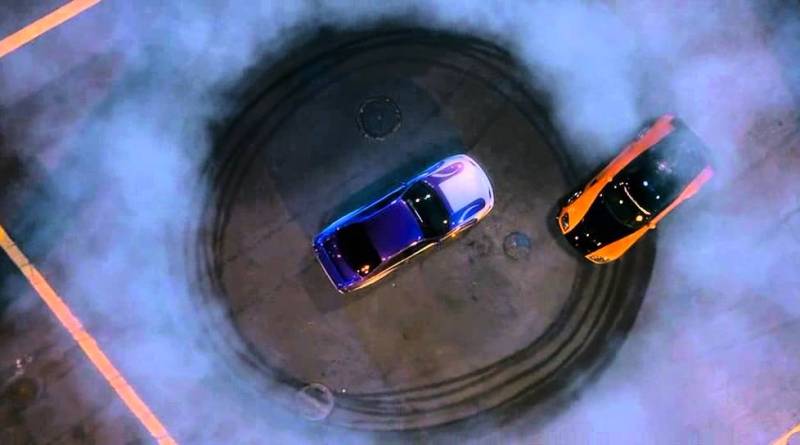
   Now onto what I liked about the film. The film actually has real engine sounds unlike the rest of the films that involve heavily edited engine sounds. There was actual drifting and no CGI. It’s more authentic, better-shot, and it's damn rewatchable for the drifts, skids, and slides. Hardly anything cringe worthy.  The dialogue is actually pretty decent. LIKABLE CHARACTERS! Not a spy thriller. No outrageous CGI moments. The film is actually about racing. The real drift king Keiichi Tsuchiya had a cameo in the film, which brings us to the last thing I liked about the film and that is the respect of car culture.


  Tokyo Drift did well at the box office, but opened up at number three behind Nacho Libre and another film dealing with cars… Pixar’s animated film Cars. Tokyo Drift is the financially least successful film of the franchise though, which is sad considering it’s the best. It’s not the best film of all time, just the best film in the franchise, which again isn’t saying much. If you hated the film when it first came out. Give it another chance. It may be a breath of fresh air compared to what you get now.


4 out of 5


Sunday, October 25, 2020

Demonic Toys (1992) Review

“I can walk, I can talk, I can even shit my pants. Can you shit your pants?”


  Back in the day, Friday nights were my favorite. I either went to the cinema to see a new movie or my father and I stopped at the local video rental shop. This was before the take off of Internet and cellular phones were as big as a suitcase. Remember beepers anyone? So if you wanted to rent a good movie (that you haven’t seen before) you either had to ask the workers at the shop who were most likely movie enthusiasts or you simply went off by the cover art. This is how I found Charles Band’s Empire Pictures and Full Moon films. B-movies with fantastic covers for the most part. There were the Puppet Master films, Trancers, Subspecies, and Demonic Toys. The cover alone for Demonic Toys made me love the film. 


    I love films where toys or inanimate objects come to life and begin killing every person they come in contact with. The person who probably loves killer toys more than me is Charles Band. He’s reutilized the idea of killer inanimate objects over and over for his films. There’s Dolls (1987), Puppet Master (1989-now), Demonic Toys (1992), Ragdoll (1999), Blood Dolls (1999), Doll Graveyard (2005), and so many more films. You have to respect the man for that. He really wanted to make “killer toys” a sub-genre for horror. He succeeded I’d like to think.


   Demonic Toys is a rip-off of Band’s Dolls and Puppet Master with a mix of Child’s Play. The film is exactly what you’d think it would be like. A sting operation goes terribly wrong. A group of people get locked in a warehouse and this leads to a sixty-six year old demon bringing toys to life to do his bidding. The demon is looking for a new body to take a physical form on earth. Fortunately for him, the policewoman is pregnant. The toys start taking out everyone in the group one by one. It’s a pretty typical Full Moon Features film.


   There’s a killer stuffed bear, a robot that shoots lasers, a crazy looking Jack-in-the-box that loves to bite, and my favorite Baby Oopsy Daisy the foul mouthed doll that loves to go stabby stab. They don’t get as much screen time in the film as I would have liked. I was shocked how good the gore was. The effects are quite good considering it’s a Full Moon Features film, which means thirty dollars for the production and a Full Moon shirt for the people involved in the film.


   Charles Band is credited with the “original idea” for the film, but the script was written by none other than the man who has us nerds split, we either hate him or love him, yep you guessed it David S. Goyer. He’s credited for the Dark Knight trilogy, Blade trilogy, Man of Steel, Jumper, and the worst entry of the Terminator franchise Terminator: Dark Fate. He’s even directed the worst entry in the Blade trilogy. He’s been involved with television, comics, and video games. It’s nice to see him start with a Full Moon Features film.


    Demonic Toys is a fun film and in a way it’s sort of self-aware. It has a lot of campy charm. It’s one of those hidden gems I’m glad I got to enjoy when I was younger, now if you’re lucky it’s one of those hidden gems that you’d find in the bargain bins. The film definitely isn’t for everyone. It’s the type of film you’d watch with buddies while you eat some extremely cheesy pizza. A good time if you shut off your brain for a bit.


3 out of 5

Nostalgic factor 5 out of 5


Thursday, October 22, 2020

Insidious (2011) Review

   It’s always hard to get a solid horror film. Of course they’re cheap to make and usually are guaranteed in box office returns. Lots of them nowadays simply rely on gore and CGI. That’s not the case for Insidious. It builds the suspense on piano notes, screeching violins, shadowy figures, slamming doors, and the scariest thing of all Tiny Tim’s Tip Toe Through the Tulips. That song is the stuff of nightmares.


   The film is about a family, Josh, Renai, and their three children, moving into a new home. Everything seems fine until some spirits come and ruin everything for the family. Their son is knocked unconscious and becomes comatose. The frightened parents turn to a ghost hunting team and a psychic for help. They discover that a spirit is hell bent on possessing the boy. So they have to stop the spirit before their son’s soul is lost to “the further”.


   Insidious is probably one of the few films that go into detail about ghost hunting and the reasons behind why it occurs. It was extremely creative and you can tell that someone really put a lot of thought into the mythology behind it. I don’t know why, but every time I watch the film I am reminded of David Lynch’s Twin Peaks: Fire Walk with Me. Probably because of the Black Lodge and the further are somewhat similar I suppose.


   To be honest, I only have one complaint about the film and that would be the film’s second half. It’s not able to live up to the high standards that were set by the first half, but that’s usual for most films actually. Imagine you’re watching Rambo and then midway through the film, it turns into a Hallmark Christmas TV movie. That’s a pretty drastic change right? That’s how Insidious felt to me.


  The film isn’t your typical horror film. First of all it’s PG-13. Usually a horror film being rated that turns me off, but it’s actually my favorite PG-13 horror film other than ‘The Sixth Sense’. It’s a horror film geared toward the more patient viewers in my opinion. Actually I believed that the film was going to be one of the few horror films that had a happy ending the way things were going. Silly of me to assume that.


    It’s reminiscent of the old-school horror flicks. Writer Leigh Whannell and director James Wan did put together a fun horror film, which spawned three sequels. Overall, ‘Insidious’ is a fun creepy film with great practical effects and a pretty decent ending.


4.2 out of 5 Black Lodge Dale Coopers


Tuesday, October 20, 2020

Fade to Black (1980) Review

“Mr. Berger, if you're firing me, I need to get my stuff out of there and my movie posters. My posters are valuable originals and I want them!”


   There are a few handful of films that about cinephiles such as ‘The Dreamers’, ‘Cinema Paradiso’, and ‘Hugo’, but for me my first film about a cinephile was ‘Fade to Black’. Essentially it’s a film about a cinephile whose obsession gets the better or him. It’s a film that both celebrates and condemns a deep love of film.


   The film centers on Eric. Everywhere he goes he is ridiculed, shunned, and ill-treated so he retreats into his movies as an escape. Black and White films are Eric’s refuge from a society that hates him. His aunt blames him for putting her in a wheelchair for something he had no control over. His boss of an advertising firm constantly calls him a fuck-up. His co-workers, who are cinephiles themselves, abuse him at work. Even strangers think he’s a creep. He has a substantial amount of movie knowledge, which he uses as pay back against his co-workers with trivia questions that they can’t answer (this is before Google and cellular phones). 

    ‘Fade to Black’ references many of the Golden Age films and many horror films as well. The film creates its very own monster as well… the cinephile pushed over the edge. Eric is a guy who thinks, lives, and breathes cinema. Then add that with his cynicism with life and he turns into morbid monster. It’s like a ‘Walter Mitty’ story gone wrong. His fantasies make him encouraged, unique, and they are also his coping mechanism to deal with a society that hurts him. When he coping mechanism goes full throttle and drives him into delusion… he starts to murder those who have done him wrong.


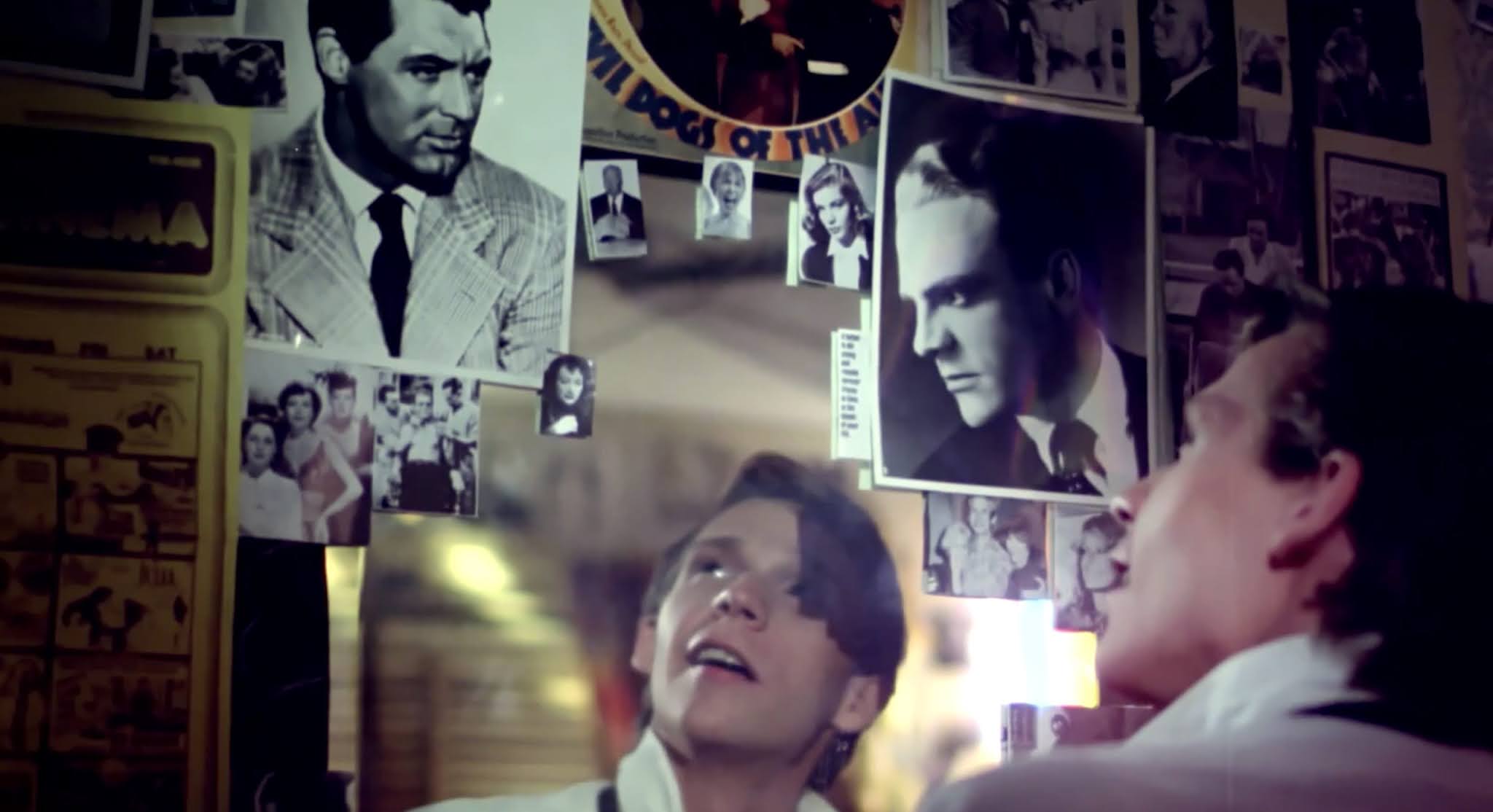
    The writer and director Vernon Zimmerman clearly knows what he’s talking about here, filling every scene with film references whether it’s in the dialogue, in the set decoration (there’s even a Tourist Trap poster at his workplace), and there are plenty of clips from some of the best Golden Age films even my favorite Cagney film. 


     Dennis Christopher played Eric. You actually feel sympathy for the guy. He just wants to escape from reality and watch his movies. When I first watched this film as a kid. I was so happy to see that there was someone like me; not the killing bit though, but that there was someone who loved the movies as much as I did. I didn’t feel that alone and knew there has to be another cinephile like me. Once again this was before social media. I actually still have the VHS somewhere. I wish they would release this film on Blu-ray already.

  All-in-all, this is an amazing and memorable experience for any cinephile. If you love film, Golden Age Hollywood, and horror this is the film for you. You can stream it on Shudder until we finally get a Blu-ray release.

5 out of 5 film reels 


The Mortuary Collection (2020) Review

  Anthology films are either a hit or miss because some segments are good and others not so much. There might be one great segment then two or three are really terrible. ‘The Mortuary Collection’ feels very much like those old school anthology films. It’s quite refreshing actually from the current anthologies that have been coming out.


   A ghoulish Clancy Brown plays an elderly mortuary caretaker who is approached by a young woman wanting a job as his assistant.  He begins to tell her a series of frightening tales about those who died in the town, a set of morality tales if you may. Unquestionably has that old school vibe. It’s hard to tell what year the film is set in since each segment is set throughout the 50s to 70s. I loved all the segments even though the middle story about the sick wife did drag on for a bit too long.


    The film looks fantastic despite its very modest budget, but at times it feels like its more style than substance. There’s some great looking practical effects especially that pregnancy bit. You can tell that they put a lot of work into their effects.


   There are some fabulous performances all round. The actors play their parts well, but Clancy Brown gives a larger than life performance. He steals every scene he’s in. Makes me miss the Carnivàle series, which should have lasted more than two seasons.


   This is Ryan Spindell’s debut feature film. He wrote and directed, which is pretty impressive.  The film is morbidly dark and scathingly funny. It’s a well-made entertaining film. Its right there up with my favorite anthology films: Trick ‘r Treat and Tales from the Darkside then of course there’s the television series Tales from the Crypt. It deserves high praise and any horror fan should give it a watch.


4 out of 5

Available on Shudder